Saturday, February 16, 2013

Video documentary film "Our Nationhood" by Alanis Obomsawin


In this 96 minute feature documentary, Aboriginal filmmaker and artist Alanis Obomsawin chronicles the determination and tenacity of the Listuguj Mi'kmaq people to use and manage the natural resources of their traditional lands. Our Nationhood provides a contemporary perspective on the Mi'kmaq people's ongoing struggle and ultimate success, culminating in the community receiving an award for Best Managed River from the same government that had denied their traditional rights.


About Alanis Obomsawin
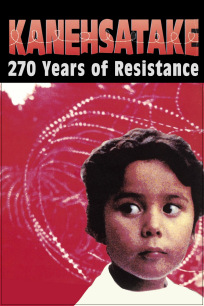
Alanis Obomsawin is an acclaimed documentary filmmaker, she was born in New Hampshire in 1932. When she was six months old her family moved to the Odanak reserve near Sorel, Quebec. Théophile Panadis, her mother's cousin taught her the songs and stories of the Abenaki Nation. At age nine she was uprooted to Trois-Rivieres, Quebec. Having grown up speaking only the Abenaki language, she had to learn French and, as the only aboriginal child at school, was taunted and beaten regularly. As a young woman she learned English and trained as a beautician before moving to Montreal, to become a folksinger and storyteller. Once she started to work with the National Film Board of Canada, she continued making films with a strong focus on social justice and aboriginal people. Her most acclaimed work was the 1993 documentary Kanehsatake: 270 Years of Resistance, about the 1990 Oka crisis. In 2009 Obomsawin was selected to be honoured with a retrospective of her work and an outstanding achievement award from the Hot Docs documentary Toronto Film Festival. Her work has been honoured and shown in festivals around the world.

Other related post links with her films to watch:

Watch 1993 interview of filmmaker Alanis Obomsawin "Behind Mohawk Lines"
The filmmaker describes some harrowing moments in the making of her 1993 documentary of the Oka crisis. Kahnesatake: 270 Years of Resistance: National Film Board of Canada.

Video Film: "Kanehsatake 270 Years of Resistance by Alanis Obomsawin - Kanehsatake, 270 ans de résistance"

Video: Documentary on Alanis Obomsawin, the activist

Video: "Telling Our Stories" by Alanis Obomsawin

Video documentary film "Hi-Ho Mistahey!" "I Love You Very Much!" directed by Alanis Obomsawin ~ the story of Shannen’s Dream

Video documentary film "Our Nationhood"

Video Documentary Film: "Is The Crown At War With Us?" by Alanis Obomsawin - "La Couronne Cherche-t-elle à Nous Faire La Guerre?"

Watch her various documentaries made with the National Film Board of Canada

Music Video: What Becomes of the Broken Hearted by Lorenzo

Shot and cut by Daniel Cheechoo on the Little Saskatchewan Indian Reserve.
Project managed and publicized by Julie Lafreniere.
Lorenzo is an Anishinaabe MC from the Little Saskatchewan First Nation located in Interlake Region of Manitoba. He provides perspective from a voice often unheard and over-looked in the traditional music communities: truthful, insightful, and providing a new sound straight from 'the Rezzy'. His music is best described as a fusion of Hip-Hop, Country and Rhythm & Blues. His lyrics are both intricate and honest, combined with his heart, message into a raspy flow that growls with the bittersweet existential angst of Reservation Indian. On stage, he captivates crowds with a guitar slung over his shoulder, singing and rhyming to the beats, allowing his style to be enjoyed by people who typically 'aren't into rap.'

 "This is goin' out to those departed
from a life so young it was barely started
and this is goin' out to the mamas cryin'
cause her son's gone home with the angels flyin'
No just reason, no denyin'
Hopeless feelings we confine in
the ones we love, the ones we trust
the ones who save us from the cusp
of the darkness when it falls
and light our lives like the shining stars
the ones who guide us through the seasons
the ones who give us rhyme and reason
the ones I truly do believe in 

who give me hope in time of treason"

Friday, February 15, 2013

Video Interview of "Alanis Obomsawin, the Activist" by CBC (Canadian Broadcasting Corporation Archive Profiles)


Video: Documentary on Alanis Obomsawin, the activist

About Alanis Obomsawin
Alanis Obomsawin is an acclaimed documentary filmmaker, she was born in New Hampshire in 1932. When she was six months old her family moved to the Odanak reserve near Sorel, Quebec. Théophile Panadis, her mother's cousin taught her the songs and stories of the Abenaki Nation. At age nine she was uprooted to Trois-Rivieres, Quebec. Having grown up speaking only the Abenaki language, she had to learn French and, as the only aboriginal child at school, was taunted and beaten regularly. As a young woman she learned English and trained as a beautician before moving to Montreal, to become a folksinger and storyteller. Once she started to work with the National Film Board of Canada, she continued making films with a strong focus on social justice and aboriginal people. Her most acclaimed work was the 1993 documentary Kanehsatake: 270 Years of Resistance, about the 1990 Oka crisis. In 2009 Obomsawin was selected to be honoured with a retrospective of her work and an outstanding achievement award from the Hot Docs documentary Toronto Film Festival. Her work has been honoured and shown in festivals around the world.


Other related post links with her films to watch:

Watch 1993 interview of filmmaker Alanis Obomsawin "Behind Mohawk Lines"
The filmmaker describes some harrowing moments in the making of her 1993 documentary of the Oka crisis. Kahnesatake: 270 Years of Resistance: National Film Board of Canada.

Video Film: "Kanehsatake 270 Years of Resistance by Alanis Obomsawin - Kanehsatake, 270 ans de résistance"

Video: Documentary on Alanis Obomsawin, the activist

Video: "Telling Our Stories" by Alanis Obomsawin

Video documentary film "Hi-Ho Mistahey!" "I Love You Very Much!" directed by Alanis Obomsawin ~ the story of Shannen’s Dream

Video documentary film "Our Nationhood"

Video Documentary Film: "Is The Crown At War With Us?" by Alanis Obomsawin - "La Couronne Cherche-t-elle à Nous Faire La Guerre?"

 Watch her various documentaries made with the National Film Board of Canada


Thursday, February 14, 2013

Video short documentary "Wade Davis - Tar Sands, Pipelines and Tankers"

Click here to watch the video: Wade Davis - Tar Sands, Pipelines and Tankers 

Click here for the two 1/2 hour, all speakers, for the Tar Sands, Pipelines and Tankers
A public forum on the Enbridge Northern Gateway Pipeline was held at the University of Winnipeg, Richardson College for the Environment & Science Complex in Winnipeg.

Wade Davis is a Fellow of Linnean Society, Fellow of Explorer's Club, Fellow of Royal Geographical Society and Fellow of Royal Canadian Geographical Society - Davis was a founding board member of the David Suzuki Foundation. He currently serves on the board of the Amazon Conservation Association, and as an Honorary Research Associate of the Institute of Economic Botany of the New York Botanical Garden. He recently completed a six-year term on the board of the Banff Centre, Canada’s leading institution for the arts.


A native of British Columbia, Davis, a licensed river guide, has worked as park ranger, forestry engineer, and conducted ethnographic fieldwork among several indigenous societies of northern Canada. He has published 185 scientific and popular articles on subjects ranging from Haitian vodoun and Amazonian myth and religion to the global biodiversity crisis, the traditional use of psychotropic drugs, and the ethnobotany of South American Indians.

Davis has written for National Geographic, Newsweek, Premiere, Outside, Omni, Harpers, Fortune, Men's Journal, Condé Nast Traveler, Natural History, Scientific American, National Geographic Traveler, The New York Times, Wall Street Journal, Washington Post, The Globe and Mail, and numerous other international publications. His photographs have appeared in some 20 books and more than 80 magazines, journals and newspapers, including National Geographic, Time, Geo, People, Men’s Journal, Outside, National Geographic Adventure. They have been exhibited at the International Center of Photography (I.C.P.), the Marsha Ralls Gallery, Washington, D.C., the United Nations (Cultures on the Edge exhibition 2004), the Carpenter Center of Harvard University, and the Utama Center, Kuala Lumpur, Malaysia. Select images are part of the permanent collection of the U.S. State Department, Africa and Latin America Bureaus.

Davis is the co-curator of The Lost Amazon: The Photographic Journey of Richard Evans Schultes, first exhibited at the National Museum of Natural History, Smithsonian Institution, and currently touring Latin America. A first collection of Davis’ photographs, Light at the Edge of the World, appeared in 2001 published by National Geographic Books, Bloomsbury and Douglas & McIntyre. A second collection is under contract for fall 2013 publication with Douglas & McIntyre. Davis’ research has been the subject of more than 900 media reports and interviews in Europe, North and South America and the Far East, and has inspired numerous documentary films as well as three episodes of the television series,The X-Files.

Davis has recently completed a new four-hour series for the National Geographic, Ancient Voices/Modern World, which was shot in Australia, Mongolia, and Colombia. It is currently airing worldwide on the National Geographic Channel as the second season of Light at the Edge of the World. Davis is a member of the International Advisory Board, Hunt Consolidated, PLNG, and is also currently engaged in a three-year campaign, Journey to Zero, an effort sponsored by Nissan and TBWA to support zero emission vehicles.

In 2009 he delivered the CBC Massey lectures, Canada’s most prestigious public intellectual forum. Davis was the series creator, host and co-writer of Light at the Edge of the World, a four-hour ethnographic documentary series, shot in Rapa Nui, Tahiti, the Marquesas, Nunuvut, Greenland, Nepal and Peru, which is currently airing in 165 countries on the National Geographic Channel and in the USA on the Smithsonian Network. He is a principal character in Grand Canyon Adventure, a 3D IMAX film, released by MacGillivray Freeman in 2008. Currently playing in 55 theatres worldwide, the film has grossed $30 million. Other television credits include the award winning documentaries, Spirit of the Mask, Cry of the Forgotten People, Forests Forever, and Earthguide, a 13 part television series on the environment, which aired on the Discovery Channel in 1990.

A professional speaker for over twenty-five years, Davis has lectured at the American Museum of Natural History, Smithsonian Institution, California Academy of Sciences, Missouri Botanical Garden, Field Museum of Natural History, New York Botanical Garden, National Geographic Society, Royal Ontario Museum, the Explorer's Club, the Royal Geographical Society, the Oriental Institute, Musée du Quai Branly, Biblioteca Luis Angel Arango, the Chattaugua Institute, the World Bank, the Inter-American Development Bank as well as some 150 universities, including Harvard, M.I.T., Oxford, Yale, Stanford, U.C. Berkeley, Duke, Vanderbilt, University of Pennsylvania, Tulane and Georgetown.

 He has spoken at the Aspen Institute, Bohemian Grove and on numerous occasions for the Young President’s Organization and at the TED Conference. His clients have included amongst others Microsoft, Shell, Hallmark, Fidelity Investments, International Baccalaureate, Bank of Nova Scotia, MacKenzie Financials, Healthcare Association of Southern California, National Science Teachers Association, Promega, NDMA (Non-prescriptive Drug Manufacturers Association), International Baccalaureate, European Council of International Schools, Canadian Association of Petroleum Geologists, Canadian Association of Exploration Geophysicists, American Trial Lawyer’s Association, American Judges Association, American Bankers Association, Centaur Technology, Canadian Association of Actuaries, Canadian Veterinary Medical Association, as well as several leading pharmaceutical companies including Warner-Lambert, Bayer, Miles, Bristol-Myers, and Abbott Laboratories.

When not in the field, he and his wife Gail Percy divides their time between Washington, D.C., Vancouver and the Stikine Valley of northern British Columbia. They have two daughters, Tara 23, and Raina 20.

Video documentary film: "Is The Crown At War With Us?" by Alanis Obomsawin "La Couronne Cherche-t-elle à Nous Faire La Guerre?"


Watch: "Is the Crown at war with us?" by Alanis Obomsawin (96 min)
In the summer of 2000, federal fishery officers appeared to wage war on the Mi'kmaq fishermen of Burnt Church, New Brunswick. Why would officials of the Canadian government attack citizens for exercising rights that had been affirmed by the highest court in the land? Alanis Obomsawin casts her nets into history to provide a context for the events on Miramichi Bay.

Regard: "Ici pour La Couronne cherche-t-elle à nous faire la guerre?"

Long métrage documentaire sur la petite communauté autochtone d'Esgenoopetitj, ou Burnt Church, au Nouveau-Brunswick, à qui le gouvernement canadien semble avoir déclaré la guerre à l’été 2000. Comment expliquer cette attaque? Pourquoi des officiers du gouvernement canadien ont-ils recours à un tel comportement envers des citoyens qui exercent un droit reconnu par le plus haut tribunal du pays?
.


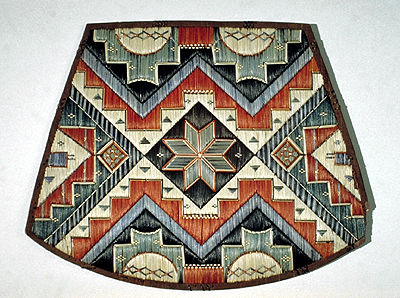
Micmac porcupine quillwork chair seat 
(Glenbow Museum/Canadian Ethnology Service, CMC)


Micmac military great coat, back view


Other related post links with her films to watch:

Watch 1993 interview of filmmaker Alanis Obomsawin "Behind Mohawk Lines"
The filmmaker describes some harrowing moments in the making of her 1993 documentary of the Oka crisis. Kahnesatake: 270 Years of Resistance: National Film Board of Canada.

Video Film: "Kanehsatake 270 Years of Resistance by Alanis Obomsawin - Kanehsatake, 270 ans de résistance"

Video: Documentary on Alanis Obomsawin, the activist

Video: "Telling Our Stories" by Alanis Obomsawin

Video documentary film "Hi-Ho Mistahey!" "I Love You Very Much!" directed by Alanis Obomsawin ~ the story of Shannen’s Dream

Video documentary film "Our Nationhood"

Video Documentary Film: "Is The Crown At War With Us?" by Alanis Obomsawin - "La Couronne Cherche-t-elle à Nous Faire La Guerre?"

 Watch her various documentaries made with the National Film Board of Canada


Video Animated Short Film: "Summer Legend" by Françoise Hartmann


Watch Summer Legend by Françoise Hartmann  This 8 minute animated short film tells the Mi’kmaq legend of the great spirit Glooscap, who in the cold white dawn of the world, battled with the giant Winter in order to bring Summer to the North.

About the Mi'kmaq Nation First Peoples

Written Language
Warrior

Video Short Film: "Mi'kmaq Family (Migmaoei Otjiosog)" by Catherine Anne Martin


Video short film "Mi'kmaq Family , Migmaoei Otjiosog " by Catherine Anne Martin (32 min)
This documentary is not longer available online to view, except through rental. You can read the description on the NFB website. This short documentary takes you on a reflective journey into the extended family of Nova Scotia’s Mi'kmaq community. Revisiting her own roots, Mi'kmaq filmmaker and mother Catherine Anne Martin explores how the community is recovering its First Nations values, particularly through the teachings of Elders and a collective approach to children-rearing.  "Mi'kmaq Family" is an inspiring resource for both First Nations and non-Native audiences looking for ways to strengthen their own families and traditions.

Video: documentary film "Kanehsatake 270 Years of Resistance" by Alanis Obomsawin "Kanehsatake, 270 ans de résistance"


Watch: "Kanehsatake 270 Years of Resistance" by Alanis Obomsawin
(119 minutes, 1993) On a July day in 1990, a confrontation propelled Native issues in Kanehsatake and the village of Oka, Quebec, into the international spotlight. Director Alanis Obomsawin spent 78 nerve-wracking days and nights filming the armed stand-off between the Mohawks, the Quebec police and the Canadian army. This powerful documentary takes you right into the action of an age-old Aboriginal struggle. The result is a portrait of the people behind the barricades.

View: "Kanehsatake, 270 ans de résistance" par Alanis Obomsawin
(119 minutes, 1992) Documentaire sur la confrontation historique qui a propulsé les problèmes des Autochtones de Kanehsatake et du village d'Oka au Québec au premier plan de la scène internationale et de la conscience des Canadiens. Au cours de cet été épuisant de 1990, la productrice et réalisatrice Alanis Obomsawin, elle-même Abénaquise, a passé 78 jours et nuits angoissants derrière les barricades dressées par les Mohawks, à tourner des images du conflit armé les opposant à la Sûreté du Québec et l'Armée canadienne.


About Alanis Obomsawin
Alanis Obomsawin is an acclaimed documentary filmmaker, she was born in New Hampshire in 1932. When she was six months old her family moved to the Odanak reserve near Sorel, Quebec. Théophile Panadis, her mother's cousin taught her the songs and stories of the Abenaki Nation. At age nine she was uprooted to Trois-Rivieres, Quebec. Having grown up speaking only the Abenaki language, she had to learn French and, as the only aboriginal child at school, was taunted and beaten regularly. As a young woman she learned English and trained as a beautician before moving to Montreal, to become a folksinger and storyteller. Once she started to work with the National Film Board of Canada, she continued making films with a strong focus on social justice and aboriginal people. Her most acclaimed work was the 1993 documentary Kanehsatake: 270 Years of Resistance, about the 1990 Oka crisis. In 2009 Obomsawin was selected to be honoured with a retrospective of her work and an outstanding achievement award from the Hot Docs documentary Toronto Film Festival. Her work has been honoured and shown in festivals around the world.

Other related post links with her films to watch:

Watch 1993 interview of filmmaker Alanis Obomsawin "Behind Mohawk Lines"
The filmmaker describes some harrowing moments in the making of her 1993 documentary of the Oka crisis. Kahnesatake: 270 Years of Resistance: National Film Board of Canada.

Video Film: "Kanehsatake 270 Years of Resistance by Alanis Obomsawin - Kanehsatake, 270 ans de résistance"

Video: Documentary on Alanis Obomsawin, the activist

Video: "Telling Our Stories" by Alanis Obomsawin

Video documentary film "Hi-Ho Mistahey!" "I Love You Very Much!" directed by Alanis Obomsawin ~ the story of Shannen’s Dream

Video documentary film "Our Nationhood"

Video Documentary Film: "Is The Crown At War With Us?" by Alanis Obomsawin - "La Couronne Cherche-t-elle à Nous Faire La Guerre?"

Watch her various documentaries made with the National Film Board of Canada


Film: Finding Dawn by Christine Welsh

Click here to watch Finding Dawn

Acclaimed Métis filmmaker Christine Welsh presents a compelling documentary that puts a human face on a national tragedy: the murders and disappearances of an estimated 500 Aboriginal women in Canada over the past 30 years. This is a journey into the dark heart of Native women's experience in Canada. From Vancouver's Skid Row to the Highway of Tears in northern British Columbia, to Saskatoon, this film honours those who have passed and uncovers reasons for hope. 

Finding Dawn illustrates the deep historical, social and economic factors that contribute to the epidemic of violence against Native women in this country.


Video: Urban Aboriginal Voices ~ Most urban aboriginal people opt to stay in city

Click here to watch VIDEO, then scroll to the bottom of the story page to see the VIDEO: Urban Aboriginal Voices
Ashley Julian


Ashley Julian, Halifax
'It's so weird to say I'm an urban aboriginal because no matter where I go, I continuously say I'm from Indian Brook [N.S.] and that's my home community. But when I'm talking to people from home, they ask where I'm from, I say that I'm from Halifax.'

(Damon Johnston)
Damon Johnston, Winnipeg
'Self-determination, that is the motivating factor. So the question off-reserve and in cities is 'what form does that take over time?' We're not going to get there overnight but we're certainly on that path.'

(Tina Pisutke)
Tina Pisutkie, Montreal
'When my mother came to Montreal she didn't want to take the bus, she'd rather walk everywhere because she was afraid of white people. People who come here know about mainstream culture only by what they saw on TV.'

Wednesday, February 13, 2013

Film: The Voyageurs by National Film Board of Canada

Click here to watch The Voyageurs by National Film Board of Canada

This short film tells the tale of the men who drove big freighter canoes into the wilderness in the days when the fur trade was Canada's biggest business. The film recreates scenes of the early 19th century with a soundtrack by an all-male chorus.

Video: Aboriginal Peoples: Mapping The Future

Land: the great misunderstanding between Aboriginal Peoples and governments throughout Canadian history. In aboriginal spirituality, land cannot be separated from the creatures that it supports and feeds, including humans. Still today, the Ojibwa speak of Pimachiowin Aki, land that gives life. For a modern industrial nation, the word "land" means wealth: agriculture and industry, mines and forests, cities and suburbs, roads and pipelines. For over 200 years, native Canadians have been relegated to the outskirts of their original land. But they have not renounced their rights and they wish to take part, too, in the country's economic life. This special report presents the context of discussions between governments and native groups on this issue.

Click here to watch the CBC video: Aboriginal Peoples: Mapping The Future

Video Full Film: Mistress Madelaine by Aaron Kim Johnston


Part of the Daughters of the Country series this film, set in the 1850s, unfolds against the backdrop of the Hudson's Bay Company's monopoly of the fur trade. In protest, some Métis engage in trade with the Americans. Madeleine, the Métis common-law wife of a Hudson's Bay Company clerk, is torn between loyalty to her husband and loyalty to her brother, a freetrader. Even more shattering, a change in company policy destroys Madeleine's happy and secure life, forcing her to re-evaluate her identity.

Click here to watch Mistress Madelaine by Aaron Kim Johnston

Video "Wab Kinew Shares Stories" with WAEC Students About Heritage, Wisdom, Healing, Trust, Individual Journey, Individual Choices

Native and non-Native Canadians can have relationships based on mutual trust and benefit. Wab stands at the divide of these two solitudes, holding out his hand. An ambassador for First Nations people. And he says it's about time Canadians - all of us - figure this relationship out.

Click here to watch the video talk of Wab Kinew to Winnipeg Adult Education Centre Students

Click here to watch the 2013 video interview with George Strombolopolous on CBC (Canadian Broadcasting Corporation)

Click here to watch 8th Fire - Aboriginal 101 videos


Video music short "Fly" by Lorenzo and Wab Kinew

Video Full Feature Film: Places Not Our Own by Derek Mazur (Starring Tantoo Cardinal)

Click here to watch Places Not Our Own by Derek Mazur 

Part of the Daughters of the Country series, this dramatic film set in 1929 depicts how Canada's West, home to generations of Métis, was taken over by the railroads and new settlers. As a result, the Métis became a forgotten people, forced to eke out a living as best they could. At the forefront is Rose, a woman determined to provide her children with a normal life and an education despite the odds. But due to their harsh circumstances, a devastating and traumatic event transpires instead.

Tantoo Cardinal her website


Video short documentary film "This Riel Business" by Ian McLaren

Click here to watch the short film "This Riel Business"

This documentary short is a cinematic recording of Tales from a Prairie Drifter, a stage comedy about the Northwest Rebellion during the opening of the Canadian West. Highlighting the roles of Louis Riel, the rebel leader, prime minister Sir John A. Macdonald and General Middleton, who was sent to quell the uprising, the play defines the Indian and Métis cause more succinctly than many history books. Here, the play is performed by the Regina Globe Theatre before an audience of First Nation Native Canadians and Métis, whose reactions are recorded.


Video: short documentary film "The Ballad of Crowfoot" by Willie Dunn (National Film Board of Canada Aboriginal Filmmaker Series)


One of the first NFB films directed by an Aboriginal filmmaker, the film received several awards including a Gold Hugo for best short film at the 1969 Chicago International Film Festival. "The Ballad of Crowfoot", directed by Willie Dunn 10-minute 1968 National Film Board of Canada documentary exploring the situation of Aboriginal people in North America through the story of Crowfoot, the legendary 19th-century Blackfoot leader of the Plains. Featuring a montage of archival photos, etchings and newspaper clippings, set against a ballad by Dunn, a Micmac singer and songwriter.

Click here to watch The Ballad of Crowfoot by Willie Dunn


Sunday, February 10, 2013

Video "The 8th Fire Prophecy" by Wab Kinew (KeyNote Speech on Inclusion Works, Diversity, and Meaningful Change)

Inspirational Video: Wab Kinew delivers an inspirational and empowering keynote speech designed to invoke new thinking within corporations about Indigenous inclusion and hope within First Nations, Metis and Inuit Peoples.

Video 2013: Wab Kinew surprises audience on The Hour with a flash mob round dance

2012 Wab Kinew Interview on The Hour and video about First Nations stereotypes and why people need to stop using them  The Hour's - Soapbox

Wab Kinew Facebook and website 

Saturday, February 9, 2013

Video: music "The Way It Should Be" by Plex (featuring Wab Kinew and Sarah Podemski)


Watch the music video "The Way It Should Be" 

Read the world-wide Award Winning Lyrics here


About: Plex is an award winning hip-hop artist, and producer, based in Toronto, Canada. For over 15 years, Plex has raised the bar amongst his Native Canadian First Nations peers while building a strong and relevant presence in mainstream Canadian Hip Hop. Since releasing his debut solo album in 2009, Plex has toured across the US and Canada performing, teaching workshops to indigenous youth and running his independent recording label New Leaf Entertainment. Since 2010 the music video for "The Way It Should Be", from his first album Brainstorm, has received critical acclaim from across the globe and has been screened at over 30 film festivals worldwide, receiving 7 awards. 


Video music "Rellik" featuring Nathan Cunningham

Music Video: Warrior by Cody Coyote (Idle No More)

Intimate creativity expressed for the world to heal in peace.


Sunday, January 27, 2013

Photography: Mongolia by Hamid Sardar-Afkhami "I am in search of the very soul of a people, a place, a culture."


Video Interview with Hamid Sardar about his photography which is part of the 'No Strangers' exhibit at the Annenberg Space for Photography.

"My journey as a photographer and as an ethnographer has been a personal pilgrimage. I am in search of the very soul of a people, a place, a culture."

Hamid Sardar-Afkhami is a professional photographer, writer, award winning filmmaker, explorer and scholar of Tibetan and Mongol languages who received his Ph.D. from Harvard University in Sanskrit and Tibetan Studies. He is based in Ulaanbaatar, Mongolia and Paris, France and participated in the National Geographic expedition that discovered the hidden falls of the Tsangpo River in Tibet.


After moving to Nepal in the late 1980’s and exploring Tibet and the Himalayas for more than a decade, he traveled to Outer Mongolia. Seeing the opportunity to create a single important collection concentrating on the last country where the majority of the population are still nomads, Sardar-Afkhami set up Wind Horse, a mobile studio ger camp in Mongolia. With his arsenal of cameras and different formats, he mounts yearly expeditions into the Mongolian outback to document her nomadic traditions.

Most recently he has dedicated his time to the exploration of Mongolia and has brought awareness to the plight of the country's various nomadic traditions through his award winning photography and films. His images have appeared in prestigious publications such as National Geographic Adventure, and Le Figaro. His documentary film was awarded the prize for the Best Film on Culture at the Banff Mountain Film Festival in Canada. Sardar-Afkhami's recent photographic project takes him to Burma where he aims to document and preserve a record of her tribal peoples.


Watch film Trailer: Tracking The White Reindeer is a film by Hamid Sardar beautifully shot and edited, this film takes us into the lives of a group of people who are little known to the outside world.

In the snow-covered plains of northern Mongolia live the Tsaatan nomads. The young Quizilol and the beautiful Solongo are in love. To prove to Solongo's father that he is man enough to marry his daughter, Quizilol has to show he is capable of raising a herd of reindeer by himself. His family gives him a young stallion to start off. During a blizzard however, the stallion escapes into the spirit dwelling mountains. If it crosses the nearby Russian border, it will be lost forever. The young man can only count on himself to capture the animal. Only if he succeeds will he marry Solongo.

Saturday, January 19, 2013

Video: City of Ruins ~ Photographs and CGI 3D Stereoscopic Reconstruction of Warsaw Destroyed During World War II ~ Recreated by Platige Image with Warsaw Rising Museum (Muzeum Powstania Warszawskiego 1944 powstanie warszawskie Operation Tempest, Storm)


Watch " City of Ruins"
Poland's first digital 3D stereoscopic recreation and reconstruction of Warsaw destroyed during World War II. The Warsaw Rising Museum decided to make a film whose restoration imagery basis would be the aerial photos and computer generated imagery 3D animation and special visual effects. Although the Museum had its disposal wide documentation from the times of the Warsaw Rising, it issued an appeal to the Warsaw citizens to submit photos that could support the realization of the project. The film depicts a flyover of the Liberator airplane over the razed and depopulated city of Warsaw, portraying the sheer scale of destruction intentionally wrought upon the capital following the 1944 Warsaw Uprising.

Compiling the source material and processing the enormous amount of information took over a year. In order to depict the city as faithfully as possible, an enormous amount of archival and referential material was amassed. Aerial imagery and photographs found in museum collections served as references for the film. A total of several thousand pictures were used in the project. Website


CG Supervisior: Michał Gryn
Director: Damian Nenow
Producer: Marcin Kobylecki
Production Manager: Magdalena Matejek


Image Credits: